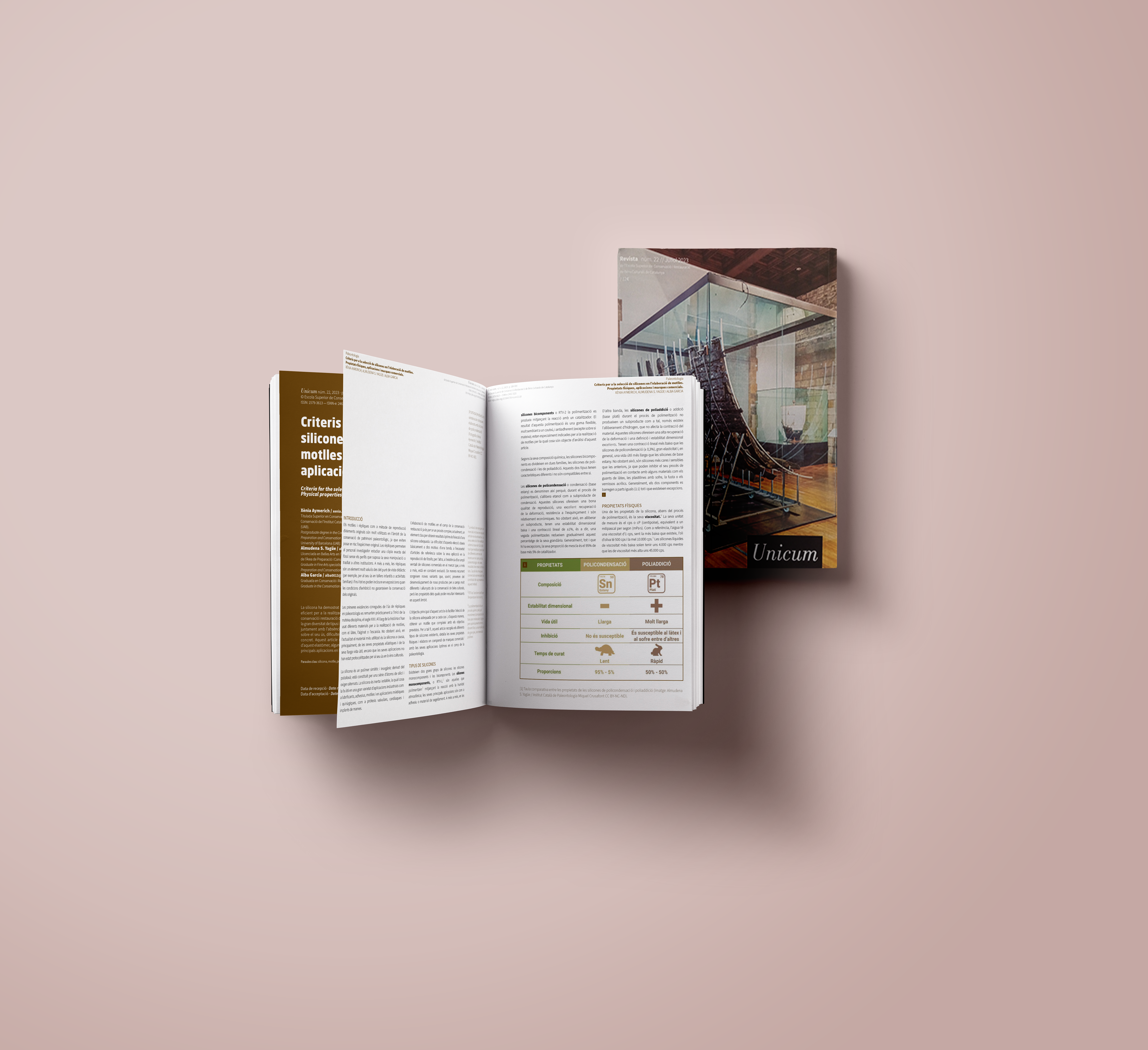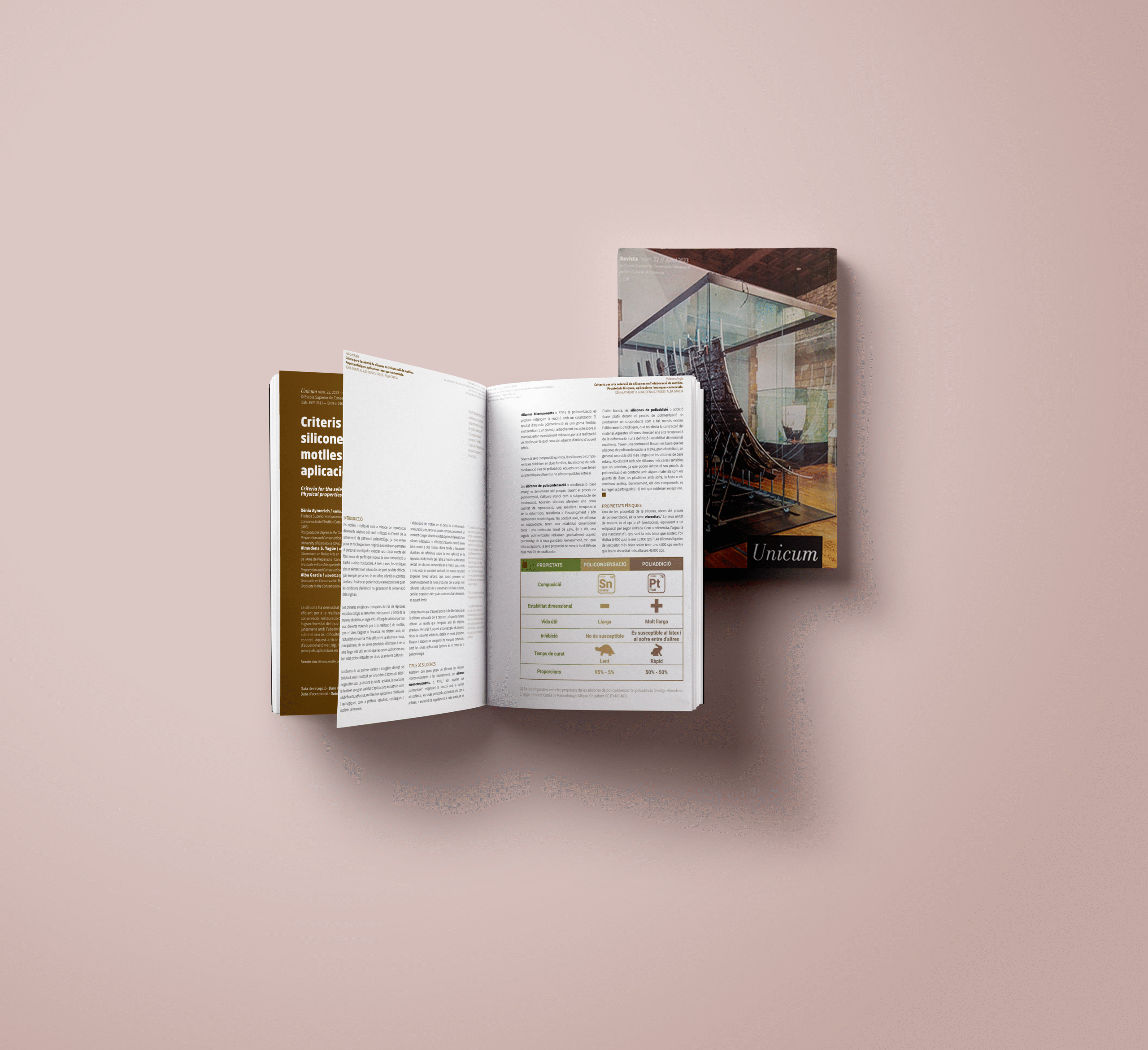
Published in UNICUM (2023)
In my recent paper published in the journal UNICUM (2023), I explore the crucial decision-making process behind choosing the right type of silicone for producing moulds in palaeontological conservation. The article guides conservators and restorers through the physical properties (such as viscosity, working life, cure time, hardness and elongation) and technical differences between silicone types—specifically condensation-curing (tin-based) and addition-curing (platinum-based) systems. Drawing on examples from fossil moulding projects, I also provide a review of commercial silicone brands and their suitability depending on factors like fossil morphology, required level of detail, number of replicas, working environment and budget.
The conclusion emphasises that while no single silicone fulfils all ideal criteria—ease of use, high fidelity, adjustable cure time, dimensional stability, long-term elastic behaviour, resistance to high temperatures, non-toxicity and low cost—the wide range of silicones on the market allows for selecting the “almost perfect” product for a given project. The article is a practical tool not only for palaeontologists but also for conservation professionals in other heritage fields where moulding is required.
With this publication I combine my dual expertise as a graphic designer and conservator-restorer: approaching material heritage with design sensitivity and technical rigour.